Showing posts with label scottish. Show all posts

Monday, 19 March 2012

The Eagle Has Landed - The Arran Eagle

Dan Dare, star
of the Eagle comics
There is currently a slew of new releases hitting the drinks market and this is naturally very exciting. Blackwood's are releasing the 2008 vintage of their excellent Shetland gin. The cask finish connoisseurs at Glenmorangie have released the Sassacaia cask-finished Artein (more on this soon); and the guys at Kilchoman have the 2006 Vintage on the market boasting a substantial five years of ageing. New releases always incur a fair deal of hype followed by satisfied approval or fist-shaking, vengeful disappointment. So as I try the new release from the Island distiller's of Arran I prepare my self for the best and the worst.

The Eagle unsurprisingly boasts a flamboyant painting of the bird of prey on its display tube. There is something about the iconography of the eagle that is quite exciting, it conjures images of Roman legions, mountainous wilderness and for vintage comic afficianados, the epic Dan Dare stories. So just from the packaging I am getting a little giddy with excitement, I am un-apologetically a sucker for branding. It is always a deeply satisfying moment when you tease off the foil cap and pop the cork and you are greeted by the aroma of what is clearly a great whisky. My experience with Arran is limited to one short vertical tasting, this whisky reminds me of Arran's excellence.

Arran Eagle
46% - Distilled 1999 - Bottled 2012
Nose: At first there is plain chocolate followed by cinnamon and dry stem ginger cut with a healthy dose of vanilla seeds. With time baked apple and a hint of gooseberry showcase the fruitiness this malt has to offer.
Palate: Green apple with the sweetness of pear dressed with cream and sharpened with a pleasing bitterness at the back of the mouth.
Finish: Chocolate again with spiced apple. I can't quite describe how long the finish on this whisky is without being sycophantic... superb.
Overall: A busy aroma followed with a Glenfiddich-eske flavour profile topped with a sturdy finish. The Eagle is a showcase of the excellent spirit flowing out of Arran at the moment. This is a new distillery reaching maturity with excellence.

Tuesday, 21 February 2012

Glenfiddich: A Masterclass

Glenfiddich Distillery
I am a huge fan of Glenfiddich. Yes, they are the world's best selling single malt whisky. Yes, they are available in pretty much every pub, supermarket and off-licence from Scunthorpe through to Kensington. And yes, they are available worldwide. BUT! I argue. They are vastly misrepresented because of this proliferation. After being introduced to whisky by drinking Talisker and Laphroaig with my Dad, I drank Glenfiddich with mates in a variety of pubs. My point? I drink such a wide range of whiskies now, but it wouldn't be without the Glenfiddich 12 year old that I could have begun to afford to do this.

Stage One. Glenfiddich 12 year old with friends in rural pubs in sleepy but largely drunk Shropshire. Stage Two. I'm nineteen in a whisky bar in Edinburgh with limited funds and I try my first highly aged whisky. It's the Glenfiddich 30 year old; I begin to appreciate 'fine' whisky. Stage Three. I work in the whisky trade I sample the Glenfiddich Snow Phoenix... life is perfect. Glenfiddich for all its availability remains for me a motorway to whisky appreciation. So, yes, I will continue to drink whiskies from small, exciting distilleries. Yes, I will continue to drink obscure cask-strength bottlings. And, yes, I will continue to drink Glenfiddich because it represents two important facets of whiskies. One, it is accessible and affordable which invites new acolytes into our glorious world. Two, as demonstrated with bottlings like the Age of Discovery and the Snow Phoenix, it's rather damn good.
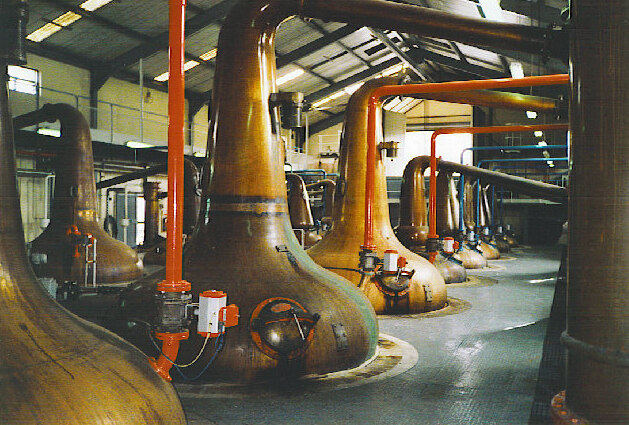
A selection of the stills
at Glenfiddich
Glenfiddich is a rather large distillery, boasting twenty-eight stills of three different shapes. It is still family owned which is something of a triumph for the world's number one single malt. To cap it off the family's blend, the renowned Grant's, is the third largest blend in the world. Despite all of this there is ingenuity within the company, demonstrated with the superb Solera Vat and Rich Oak bottlings. The first using the Spanish/Portugese system that means the vat is always left at least half full (potentially some whisky from the first dosage is still in there; fast forward fifteen years...); the latter uses virgin American and Spanish oak for excellent results. So yes we've all tried an array of delights from casks from Islay to Japan but where would we be without that Glenfiddich 12 year old in that pub smelling discreetly of cabbage and pumping power ballads out of the jukebox; I'd argue not here. Not in a world of singe casks and a whsky boom. So here's to Glenfiddich - the beginning!

I was lucky... quite a while back. Steve Rush of that there Whisky Wire invited me to a Twitter Twasting to try not one.. not two.. not even three.. but four Glenfiddich whiskies. I was happy to join, but curse my luck I had to host another tasting elsewhere and could not participate. Still, I am armed with the whiskies so a tasting is well in order! To top off my good luck, Jamie Milne of that there Glenfiddich kindly invited me to my Almer Mater's big brother, Boisdale of Canary Wharf, to taste a few more of this Speyside distillery's delights. So here follows a lot of tasting notes...

Firstly the Twitter Tasting samples:

Glenfiddich 12 Year Old
40% - Distillery Bottled
Nose: Nutty caramel at first, becoming vinous with stewed pears to compliment. With time a gooseberry element appears.
Palate: Soft and sweet with a slight bite. Biscuit and spice pleasantly massage the palate.
Finish: Malty with oaky vanilla and spice.
Overall: This is a whisky that has so much going for it, and is as great a Scotch for beginners as it is for the veteran wanting a relaxing dram.

Glenfiddich Solera Vat
40% - 15 Years Old - Distillery Bottled
Nose: Orange rind, raisins and currants, vanilla pods, mixed spice. After this Christmas cake fanfare there are pleasing notes of cider.
Palate: A burst of spice and fruitcake, very sweet, very rich. Then I get a suggestion of smoke?
Finish: Gentle oak, Christmas cake dough, stewed apples and dark brown sugar. A long finish becoming creamy and spicier with time.
Overall: I think this long tasting note says it all, a great whisky. Plus the use of the Solera system promises plenty for the future!

Glenfiddich 18 Year Old
40% - Distillery Bottled
Nose: Chocolate cake topped with fudge, on a bed of stewed pears scattered with mincemeat.
Palate: Rich Christmas pudding notes followed with plain chocolate and ground coffee. Finally some of that pear from the nose spins in.
Finish: Very gentle but lengthy with light spice, cinnamon maybe.
Overall: This whisky is more elegant than the above and arguably more refined. A pleasing dram that presents its age nicely but not as exciting as the Solera Vat.

Glenfiddich Age of Discovery
40% - 19 Years Old - Madeira Casks
Nose: In the nicest possible way; cheap dark chocolate. Then there is a storm of nutmeg, stewing Bramley apples metamorphing into Granny Smith's, and a dusting of cinnamon.
Palate: Intense rich stewed fruits with a fair dollop of wood spice. On top of this there is orange zest and essence of a sweet shop.
Finish: Chocolatey, with light fleshy fruit and in time sour sweets provide a fantastic encore.
Overall: A really interesting whisky here, I don't usually appreciate Madeira finishes, but the Age of Discovery demonstrates their use excellently. If I was nitpicking I'd argue for a higher ABV to give this great whisky more weight, but I quite like that Glenfiddich flys the bottle-strength flag proudly!

And the ones Jamie Milne kindly allowed me to try:

Glenfiddich Rich Oak
40% - 14 Years Old - Virgin American and Spanish Oak
Nose: Clear new oak influence, fresh orange juice and peel, leading to dominant vanilla and dried apple. With time - oat cake notes develop.
Palate: Very creamy, focussing on vanilla and lime zest flavours; with the oak perpetuating throughout.
Finish: Masses of oak here, with tempting hazelnut nuances on top.
Overall: The new make spirit really comes through. This dram is evidently oaky but the virgin wood influence never destroys the balance of the palate.

Glenfiddich Distillery Edition
51% - 15 Years Old
Nose: Grapes and gooseberries join a floral nose with strong yet clean vanilla notes.
Palate: Ginger and black pepper immersed in blackberries.
Finish: Ashy at first but followed by blackcurrant jelly and dried berry fruits.
Overall: The unusually high ABV is excellently disguised. This whisky tastes very different from the distillery norm but is very good for it.

Glenfiddich Gran Reserva
40% - 21 Years Old - Rum Cask
Nose: Banana with light heathery floral notes doused in brown sugar and heaps of figs and dates.
Palate: Fruity and peppery; with lime highlights and hints of anise and spearmint.
Finish: Citrus limes notes dominate with cardamon spice and a distinct fruitiness.
Overall: Intriguing; this Glenfiddich offers something different again, like the Distillery Edition. This whisky adds something once again to the Glenfiidich range.

Sunday, 19 February 2012

Hammer of the Gods - Highland Park Thor

Against the mountainous backdrop, behind the din of thunder and curtain of lightning, stands a figure. At first it is hard to discern whether it is man or beast, but a red beard grizzled with blood, and a stoic stature of a warrior mark this being human if in form only. The wind howls and the storm rages as this giant begins to swing a mighty warhammer about his ironclad head, laughing with a mania that strikes fear in even the most veteran of soldiers. He slowly advances, each footfall carefully planted, centre of gravity low. Then as the hammer reaches the apex of its whirl, it pauses in suspended animation as lightning forks around it, before it comes crashing towards you. Hammer-time. You have just met Thor.

Zeus, Poseidon, Jupiter, Mars, Anubis, Osiris are all deitic names that conjure up instant images of godly figures. The branding of these gods is so proficient that even after hundreds, if not thousands, of years after the demise of the societies that spawned them we all still know the myths that created them. For all of these gods and goddesses, none has such a violent and manic portrayal as the Viking god, Thor; the scourge of giants and mountains. This lusty berserker of a god with his faithful hammer, Mjolnir , is renowned in both myth and film as being something of a boozy mad man, the kind of guy who would bop a foe on the head before asking pertinent questions. Furthermore, his legend is so prevalent, that we even have a weekday named after him and now, a whisky...

What I like about Highland Park is that they are great at tying stories in with their whisky. The Earl Magnus series of the last few years was a romp through Orcadian history. The initial release was the Earl Magnus bottling that detailed the history of the Earl of the Orkney islands. Next came the Saint Magnus bottling that referenced Magnus' canonisation. Finally there was the Earl Haakon bottling (complete with black packaging) that told of Magnus' Viking cousin who murdered him for control of the Orkneys. All of this gives a whisky a bit more drama and character that I think makes drinking the damned stuff a lot more interesting. Highland Park's latest series is that of Valhalla. There will be four releases, each defined by a Viking god (I'm guessing Odin and Loki will turn up in the mix). I have to say, that expense aside, I am quite excited. The Thor bottle (blue, chipped-effect glass) is entombed in a wooden longship design case that lends a Nordic majesty to this rather fine dram. So let us raise our flagons of mead with a hearty roar and salute Thor - the god of war (Rhyme; thor-oughly intended).

Highland Park Thor
52.1% - 16 Years Old
Nose: Fruity red apples, orange, blackberry and a whiff of smoke. Then the is pepper and warm spice, notably nutmeg and cinnamon. With time green apple, fruit-loaf and orange zest become apparent.
Palate: Initially masses of smoke and pepper then red fruit and stewed citrus notes. With water the palate becomes sweeter particularly on the tip of the tongue. More smoke and brine arrives later with a sherbert quality to boot.
Finish: A beach bonfire, ashy, almost abrasive. Next there is boiled sweets and a bit more brine.
Overall: The Orcadian landscape in a glass. Thor has been well represented. For me the nose and palate were so different that it really intrigued me. Truly phenomenal stuff!

Thursday, 16 February 2012

The Case for Bottle Strength Whisky

I can remember what originally attracted me to the brutish power of cask strength whiskies. It is exact same impulse that made me discover absinthe and even the same feeling that made me drink whisky in the first place. It is a vainglorious combination of the childish notion that the stronger the alcohol I imbibe, the more hairs that will join the disparate collection on my chest; indeed if I had pursued this policy after Uni I’m sure I would not only have a chest, but also a back to match even the scrawniest gorilla. The other facet of this combination is a desire to know what whisky at high strength tastes like; it is similar to climbing taller and taller mountains – I need to know what it’s like at the top. So armed with this alcoholic notion in mind I plunged into the world of cask strength whiskies. At first it was an exciting voyage of discovery, I can still remember my first cask strength Laphroaig like it was yesterday, it was a beautiful oxymoron that I can only liken to your first kiss followed by a punch to the face. However over time I have begun to question the growing proliferation of high strength whiskies. More and more we are seeing whiskies bottled at cask strength and fewer cruising in at a mild 46%. What concerns me is that in our quest to experience whisky in its truest form we are neglecting the art of bottling whisky at a palatable strength. I enjoy the subtle dropping of water to lower the strength whilst pretending I am a master blender as much as any whisky fan, but in doing so I am cheapening the skill of said master blender. For example Talisker 10 Year Old surfs in at 45.8% and the Fifty-Seven Degrees North at… well 57% for a very good reason; they taste best at those strengths. Naturally I am not arguing that the whisky world should forgo cask strength whiskies entirely. Indeed I wouldn’t even reduce the amount of cask strength bottlings out there but I would like to argue that some whiskies are hindered rather than enhanced by high ABV values. For example many Scottish Lowland whiskies are so light in flavour they are easily overpowered by the alcoholic content. Conversely, last year’s Auchentoshan Bordeaux Cask surprisingly integrated a whopping 58% into its flavour profile quite nicely, demonstrating how alcohol content can enhance the tasting experience. Another example would be the Diageo Special Releases 2011; for me the Knockando 25 Year Old would have benefitted from being cask strength whereas I thought the Port Dundas 20 Year Old would not have been harmed by dropping its ABV so as not to drown its syrupy texture in ethanol. What I am harping on about is that although, irrevocably, my chest and indeed my dwindling masculinity requires cask strength whisky like a plague victim needs a vaccine, whisky doesn’t necessarily have the same requirements. So pass me a Glenfiddich Solera Reserve and toast Bottle Strength whisky. Slainte!

Wednesday, 25 January 2012

Rediscovering The Classics: Lagavulin 16 Year Old

Tonight's review is of another classic; the stoic Lagavulin 16 year old. I have to confess I am no expert on Lagavulin. Aside from it being peated and coming from the south of Islay - I know very little about this Diageo owned distillery. Furthermore I've always avoided trying them. Trapped between its showy brothers at Laphroaig and Ardbeg, it always seemed like the clichéd middle child offering nothing more than a sturdy uninspiring malt. As usual I am very very wrong. Lagavulin offers balance, restraint and a refined spirit. Qualities often drowned out by large peaty gestures at Laphroaig and Ardbeg. The Lagavulin 12 year old may be a balls-out offering, and the Distiller's Edition may be a tad confused, but the 16 year old brings complexity to the table. So with apologies to Lagavulin for my previous ignorance, I give you the 16 year old...

Lagavulin 16 Year Old
43% - Distillery Bottling
Nose: Peat and barbecue smoke with a gristy accompaniment. Then there is kiwi fruit with something orangey beneath.
Palate: Big peat with a thick texture yet refined and larconic.
Finish: The peat has died away to embers and with time baked green apple emerges.
Overall: Absolute classic, excellent structure and balance. The Lagavulin 16 year old isn't about slapping you in the face with a peat shovel it is about restraint and pace, and it is a very hard drink to put down. Slainte!

Monday, 23 January 2012

Freezing In Camden... Tactical Nuclear Penguin

http://www.brewdog.com/bars/camden
I'm sitting in a brand new pub in North London's Camden Town, sipping at an aptly named pint of Zeitgeist. Zeitgeist is the phenomenal black lager from Scottish punk brewers Brewdog - and it is in their new pub in which I sit. I'd only recently read about this new drinking establishment and being a massive fan of their hoppy produce I had to have a peek. The pub is simple with lots of zesty wood and metal and a row of taps emblazoned with the Brewdog logo. In fact the branding is incredible, from pint glasses through to the generous beer menu the place just screams Equity for Punks. Furthermore the food menu was put together by a Masterchef winner, they offer free pints in exchange for board games and they sell the strongest beer known to mankind. Naturally I reacquainted myself with most of the range; from the 5am Saint through to the outstanding Punk IPA (that I recommend wholeheartedly). At the end of the night there was only one beer left that needed to be drunk. Now the Sink The Bismarck bottling was sold out, but Brewdog's first high alcohol beer was good to go. This malt menace was the cartoony Tactical Nuclear Penguin. This beer is frozen three times and the ice (water has a higher freezing point than alcohol) is scooped off, leaving a beer with a higher alcohol content. Served in a charming glass this was a ballsy end to punktastic evening. I only need to try the food now...

Tactical Nuclear Penguin
32% - Brewed by Brewdog - High Alcohol Beer
Nose: Toffee and heavy malt aromas dominate to begin with but with big, rich, fruity sherry notes banging through later.
Palate: Incredibly thick, almost sugary, with a pungent woodyness shoring up a heavy but velvety beer.
Finish: So long, with burnt toffee followed by that fruity sherry character from the nose.
Overall: I could only drink one of these in one session due to the hugely rich flavour. However in terms of complexity it was fantastic; like a beefy oxidised sherry. This is a brilliant beer to have if a whisky before closing time doesn't appeal. Rock on!

Monday, 14 November 2011

Can you figure it out? ...As We Get It 8 Year Old

I've always liked the idea of detective work, not in a News of the World tap-your-phone-kinda-way, but in a Sherlock Holmesian deductive style. I quite like how logic and attention to detail can unearth a story hidden behind finger prints, mysterious notes and a mad dog on a moor. There is an inherent romance in the power of mind and reason over seemingly disparate evidence that when pieced together solves a heinous mystery. In the same way I've always enjoyed reading studies relating to the evolution of man. How with a few bones and a couple of rocks paleontogolists and anthropologists can discern where we came from, when we came from and how we came from being apes picking each others scalps to being literate beasts capable of making fine oak-aged spirits that in large quantities send us back so many thousands of years to being chimps in the mud again.

There has been a fun development in Scottish whisky in recent years. This is the bottling of single malt whiskies under brand rather than distillery names, Smokehead jumps to mind here. The idea is that the distillery remains a mystery to the consumer, this of course invites speculation as to which distillery produced which mystery bottling. Recently I tried one of Ian Macleod's 8 year old Islay As We Get It bottlings, and had a shot at identifying the distillery behind the mystery. My guess was Ardbeg, although with only a small glass to taste from I could easily be wrong. It wasn't as maritime as Laphroaig, Bowmore or Caol Ila, and too old to be Kilchoman. Bunnahabhain and Bruichladdich were definitely not the distilleries and Lagavulin just seemed unlikely. So with its densely peaty character and lack of maritime seaweed, my guess is Ardbeg, but I am happy to be corrected!

As We Get It
58.4% ABV - 8 Years Old - Bottled by Ian Macleod
Nose: Cloves crash into the sinuses first followed by the gentle caress of toffee which in turn is followed by a sweet peatness that warns of the storm to come.
Palate: Spicy with strong peat, there is a touch of medicinal orange that is needed to cure a hot palate.
Finish: Coal smoke at first, if a tad bitter, with a long nutty conclusion.
Overall: I quite enjoyed this dram, it had some flavours that intrigued, others that battered and ones that soothed. Great stuff indeed!

Sunday, 6 November 2011

Bad Reputation: Blended Malts... Compass Box Eleuthera and Wemyss Peat Chimney

Scandalous
Myth’s and fabrications can make or break reputations. Many a celebrity has been thrown into the lion’s pit of paparazzi exposure and tabloid conjecture that has quashed their careers like the Resistance on Alderaan. It only takes a slight turn of phrase to turn an innocent comment into an insult that strikes the very core of human morality and creates a reputation feeding frenzy that keeps the tabloid beast sated for several months. As soon as a reputation is tarnished it becomes very difficult to scrub it clean - no amount of Brasso is going to help Matthew Kelly reclaim his former fame. The other approach of course is to revel in it, as the indomitable Russell Brand does, so that any misbehaviour can be turned into a ladder to the stars.

Reputation is central to the perception of a whisky; it can win a whisky great favour and allow them to charge increasingly high prices off the back of it. Or, conversely, it can lead to a long hard crawl back to recognition and acceptance. Beyond brand awareness reputation also affects the perception of types of whisky. No other type of whisky has received such a panning as Scottish blends and blended malt. Consistently, and I argue - wrongly, blends (and blended malts) are seen as an inferior product to the more expensive and purer single malts. This myth that blends are somehow a cop-out version of the ‘better’ single malts is in urgent need of reversal. Thankfully a small number of blending companies are trying to overturn the wash of apathy and demonstrate to the world that blended can be better.

When talking about modern blends and blended malts, one company always jumps to mind. That company is of course Compass Box, who I jump at any chance to review. Compass Box are beginning an enlightenment in the world of blended whisky. Their Spice Tree and Hedonism bottlings in particular are testament to the work they have done to show blended can mean better. Alongside Compass Box there is another company doing superb work. This company is that of Wemyss Malts. Their philosophy is that the world’s best wines are all blends so why shouldn’t this apply to whisky? It wasn’t until the other weekend when I finally got to try one of the Wemyss range (and I was very impressed, as you will see) that I have to agree with them. Why shouldn’t a whisky be better than the sum of its parts? The same weekend my dad and I visited a small beer and whisky shop in Ludlow (Shropshire) and, to our luck, we found a Compass Box bottling that as far as I am aware is no longer available. After purchasing a bottle and a fair few beers, we went home to try this elusive blended malt, as well as the Wemyss Malt my dad had purchased previously.

Compass Box Eleuthera
46% - Scotch Blended Malt
Nose: At first peppery reminding me instantly of Talisker. This leads to a soft blend of wood smoke and peat complimented with gooseberry and brine, with time pleasant banana notes introduce themselves subtlety.
Palate: There is a grainy texture I associate with the Glenfiddich Snow Phoenix with honey and red fruits (notably strawberry and raspberry) served on a smoky palette.
Finish: Peaty with salt and fennel concluding with a shot of coffee.
Overall: Why is this whisky no longer made? This for me was an instant go to whisky which unfortunately it can never be. There is peat present without being excessive, pepper without being hot, and green fruit balanced with red. Just excellent.

Wemyss Peat Chimney
40% - 8 Years Old – Scotch Blended Malt
Nose: A fantastic combination of iodine peat smoke and Christmas pudding, or maritime sherry if I can coin the term. This combination that often doesn’t work melds excellently in this blended malt.
Palate: Peat and pepper hold the ground here; the palate is beautifully light and is completely un-cloying.
Finish: A burst of spice topped with clean peat, fresh and to the point.
Overall: Exceptionally pleasant, clear but not overpowering peat, this dram has a bite but doesn’t shake. I have to try Wemyss’ Spice King and Hive soon!

Friday, 4 November 2011

Grant's Twitter Tasting

Last Wednesday evening I was in a hurry. My heart was pounding and my adrenaline soaring as I crashed down the escalators at Tottenham Court Road, knocking tourists and business people to the floor in my mental haste. I tore through the ticket barriers, sidestepped a police officer and leaped onto my train. As soon as the train pulled into my home station I threw myself out of the doors almost bludgeoning an innocent bystander with my bag and I scattered down the stairs executing a combat roll at the bottom purely for style. You may ask why I was making this Jason Bourne-eske effort to get home. The reason for this mad-dash rush was that I was meant to be participating in a Twitter Tasting courtesy of The Whisky Wire and Grant’s Whisky but thanks to an emergency I was leaving work an hour later than planned. While I was on the train I stewed in silence as I realised the world was against me taking part in Twitter Tastings. Last time my computer wouldn’t play cricket so I had to strap two Blackberry’s together and this time I was running late, I think next time I will be staying at home, rigging a Moon Mission array of computers up in my flat and won’t answer the phone until every whisky has been tasted and tweeted. Anyway… Thankfully my girlfriend had Twitter up and running as soon as I got in and had my whisky poured ready so I only missed the first half and was able to jump straight in and taste the eighteen and twenty-five year old Grant’s blends. I was in for quite a treat as these whiskies were well worth a sprint home. For the sake of continuity I will write my notes in the order I should have tasted them starting with the Ale Cask then moving from the twelve to the eighteen to the twenty-five year old. Thanks to everyone who took part and to Steve at The Whisky Wire and Ludo of Grant’s Whisky!

Grant’s Ale Cask Finish 
40% - No Age Statement – Scotch Blend 
Nose: There is the instant suggestion of the influence of hops creating a cereal forward nose with sponge cake and honeyed cream. With time a grassy quality emerges becoming more and more gorse like.
Palate: Creamy with malt biscuit flavours with a bitterness I would associate with beer. Usually this would put me off a whisky but I thought it played nicely with its cask finish.
Finish: A little sharp but refreshing and malty.
Overall: This is the first ale cask finish I have ever tried and I like new approaches. The whisky didn’t have much depth but compensated with it’s beery character.

Grant’s 12 Year Old 
40% - Scotch Blend 
Nose: Heavy on the cinnamon with plenty of vanilla and a hint of lemon curd. Most interestingly there is a charcoal element that is quite intriguing.
Palate: Very light and delicate with wood spice and an earthy quality that draws on the charcoal notes from the nose.
Finish: Brief with notes of spice and vanilla pods.
Overall: Great nose with lots going on, this blend really requires a longer finish to gain the favour it should deserve.

Grant’s 18 Year Old 
40% - Scotch Blend – Port Cask Finish 
Nose: Port leaps out of the glass first with rich cake notes smothered in marzipan and candied orange peel. With time conifer forest notes appear with a hint of peat.
Palate: Very earthy, with rich fruitcake and warming peat adding depth and a satisfying aftertaste.
Finish: Spice and jam go hand in hand here in what I like to call a chutney finish.
Overall: So much more going on here than in the previous two whiskies. The port finish gives the nose delicious fortified wine notes, and the palate is beautifully rich and luxurious. A blend done good!

Grant’s 25 Year Old 
40% - Scotch Blend – Rare malts and early Girvan in the mix. 
Nose: Peaches and ginger in a soft but spicy tango followed by rich brandy sauce and Christmas pudding. The Whisky Review noted cola sweets and I have to heartily agree here.
Palate: A creamy palate once again here but with plain chocolate stirred through. This leads to pulpy dried fruits, notably dates and prunes with an alcoholic cherry flavour following.
Finish: Long and spicy with almonds sprinkled over. Beyond this there is coffee and an essence of wood smoke.
Overall: Packed with interesting flavours that compliment and enhance one another, complexity is the word here. I couldn’t decide between this and the eighteen year old… although in hindsight it had to be the twenty-five, it makes me want to pour another glass.

Sunday, 23 October 2011

Lost Distilleries Chapter 3: Port Dundas 20 Year Old

This is my second review of the Diageo Special Releases 2011 (see here for the floral Rosebank).

Grain whisky has been an important discovery for me. Alongside rye whiskey, grain has opened up a completely new style of whisky to my palate. For the uninitiated grain whisky is made from unmalted grain, whereas single malt whisky is made from malted barley. Grain whisky can be distilled in pot or coffey stills, and has a sweeter flavour to malt whiskies. My awakening to grain was at the hands of the sublime Compass Box Hedonism, a syrupy dram that is just fantastic. Grain whisky is often under-represented as the vast majority of the product is used for blended whiskies, and hence is much under-appreciated.

Tonight's review is of the first ever Diageo Special Release grain whisky from the closed distillery at Port Dundas, that like most Scottish grain distilleries, was in the Lowland region. It was closed in 2009 when Diageo grain whisky production shifted to Cameron Bridge and North British distilleries. This release is 100% grain whisky and the oldest official release, blended from three casks distilled in 1990 and matured in a combination of casks. This was to be a bit of a treat.

Port Dundas 1990
57.4% - 20 Years Old - 1,920 Numbered Bottles Worldwide
Nose: Cherry leaps out of the glass with dark chocolate chasing behind in a combination much like the Green & Black's Cherry Chocolate. There is a real leatheryness to the nose with a grassy freshness mingling in. On a second take sawdust announces itself ever so politely.
Palate: Pepper and tobacco swirl around in a spicy waltz on a vanilla dance floor. Syrupy if a little too hot on the alcohol, water improves this dram.
Finish: Light yet vast, chocolate eclairs galore with a touch of aniseed.
Overall: Very good, a lot of complexity and depth here. I felt this whisky didn't need to be cask strength though, still with water, amazing.